
Contractor and Property Cabinet Packages in Silver Spring, MD
Put quantities and project requirements into a cabinet package brief.
Send my cabinet inquiry
Or call (562) 203-3232. Calls only, we do not receive text messages.
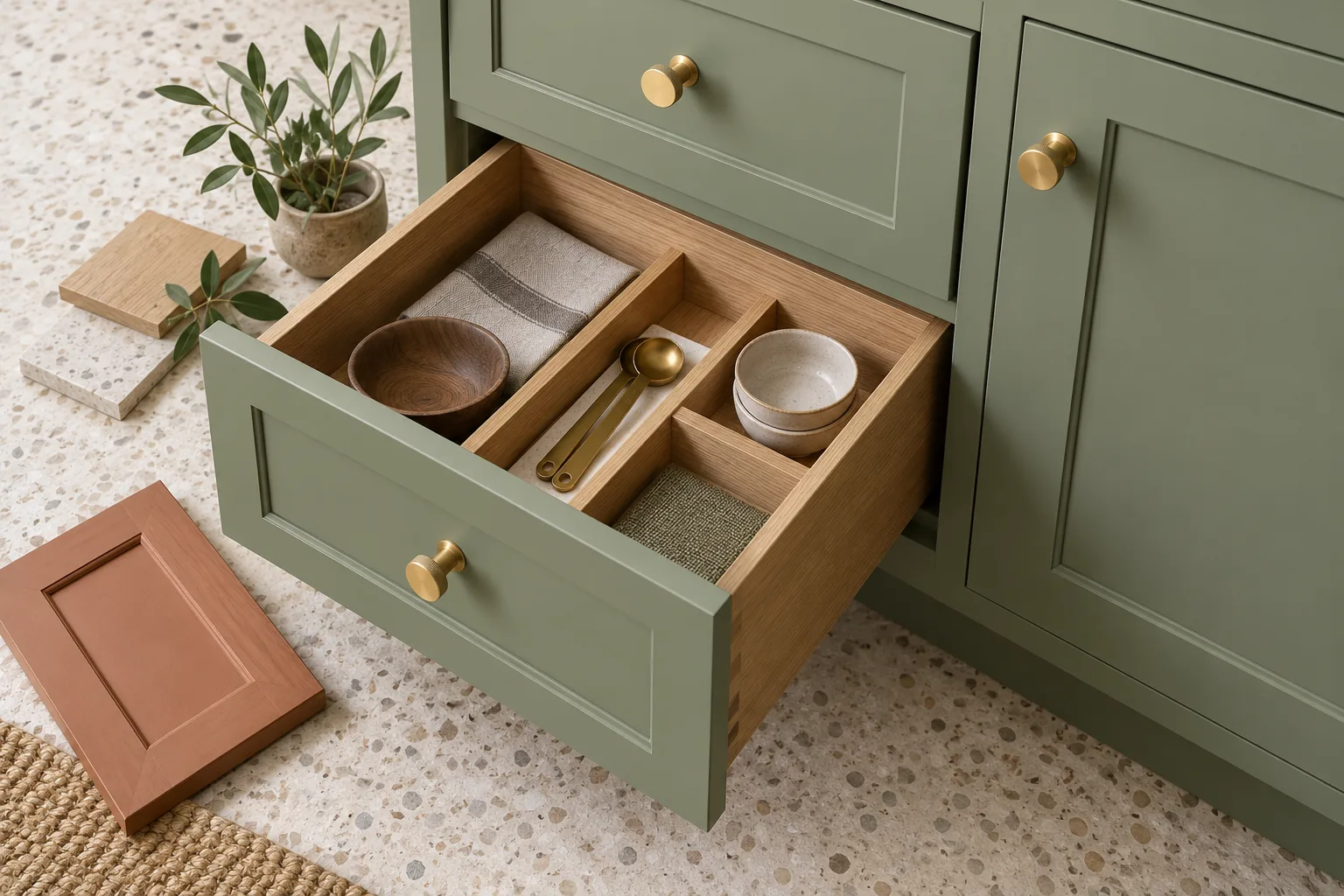
Contractor and property cabinet packages in Silver Spring need more than a repeated kitchen multiplied by a unit count. Silver Spring Cabinet Avenue explains a room-tagged bill of materials that preserves exceptions, revision authority and release decisions. Use it when similar spaces must be ordered together without losing the differences that affect quantities, fit and receiving.
- Independent buying guidance
- Product inquiries
- Seller availability confirmed separately
Buying questions: contractor and property cabinet packages
The method is purchasing preparation, not a trade-account offer or evidence that a supplier accepts the project. The site owner records and reviews inquiries. Project sharing with an outside recipient requires your permission and its actual acceptance; submitting a professional inquiry does not establish credit, special pricing, product availability or a response commitment.
About Silver Spring Cabinet Avenue
Know who handles each part
Independent cabinet buying information and quote-request service. We do not manufacture, stock or install cabinets. A referral, supplier response, appointment or purchase is not guaranteed. Product availability, delivery and installation must be confirmed directly with the seller or separately engaged contractor.
Establish a room key before counting boxes
Give every unit, room and cabinet position an identifier. Keep identifiers stable while product selections change. A hypothetical package containing three similar kitchens might use unit labels A, B and C, with cabinet positions within each. The labels do not need complex software; they need to make every quantity traceable to a real location.
Separate typical layouts from exceptions. A mirrored room may require different handing, and a retained appliance can distinguish one unit from the others. Do not erase those differences by writing a single generic kitchen quantity. Record existing measurements or proposed drawing references for each room. Mark preliminary designs accordingly. A package schedule communicates requirements but does not validate them. Assign responsibility for checking order-critical dimensions before release. This lets a seller question a specific position without forcing the team to reconstruct which room an unlabeled line item was intended to serve.
Keep finish codes and configuration together
For each position, list the proposed line, dimensions, configuration, finish and quantity. A shared finish name without a product identity can become ambiguous when multiple collections use similar descriptions. Keep seller identifiers once available, alongside your own room labels, so the commercial item list and project schedule remain connected.
Record accessories and finishing pieces at their actual room positions rather than only as bulk totals. The aggregate can be derived later, but the room allocation is needed to explain it. A hypothetical end-panel quantity may differ between two otherwise similar units because one run has an exposed edge. Preserve that exception. If certification is part of procurement criteria, request line-specific support for the claim; KCMA identifies ANSI/KCMA A161.1-2022, but an unnamed package is not established as certified. The schedule should show evidence sources without confusing a construction requirement with a seller’s confirmation that its offered product meets it.
Keep a separate aggregate view for purchasing convenience, but retain the room-level allocation underneath it. Otherwise a corrected total can conceal an unchanged error in where products are assigned.
Give revisions an owner and a cutoff decision
Identify who may change the schedule and who approves release. Record revision date, changed positions, reason and status. A conversation proposing an alternate should not automatically become an approved substitution. Keep the earlier version available, and issue the approved revision to everyone relying on the item list.
In a hypothetical phased package, a finish change in one room might occur after other rooms have been approved. Ask which quantities can still be revised under the seller’s actual terms. Do not assume a universal cancellation window. A revision log should link the project decision to the respondent’s written acknowledgment so an internal approval is not confused with acceptance by the seller. When several people contribute measurements, make the authority chain visible. This prevents a preliminary note from being treated as a purchasing instruction by someone who did not attend the conversation. Clear version control reduces ambiguity; it does not promise error-free delivery or a contractual remedy.
Check buyer eligibility before discussing package benefits
Ask the proposed seller whether it accepts the project type, buyer and destination before relying on its catalog as a procurement route. Then request its documented payment, ordering and substitution terms. Trade pricing, credit accounts, minimum quantities and project acceptance are not established by this site or by the presence of a contractor guide.
Compare any requirements against your own purchasing authority. A hypothetical property manager may need owner approval for an alternate while a contractor has a different internal process. Record those actual project arrangements without inventing a legal rule. If a respondent cannot meet the package’s requested release pattern, document the difference and decide whether it is workable. Keep communications factual and bounded: which item schedule, which phase, which address and what answer is needed? A clear professional request is helpful, but it does not entitle the buyer to a seller response or special terms not agreed in writing.

Use phase-specific cost estimates
Build a cost estimate by phase and room allocation before producing the overall package total. Identify product quantities, alternates, freight, storage and separately arranged assembly. Shared charges should have an explicit allocation method in your comparison, rather than appearing twice or disappearing between phases. If a charge is unknown, keep it open so the aggregate does not imply completeness.
Phase estimates are subject to change while quantities, release timing and seller terms remain unsettled. Obtain a written quote referencing the approved revision and its specific phases. FTC guidance supports comparing described materials, scope and price; the room allocation method is a procurement inference, not a documented Silver Spring trade rate. A hypothetical alternate can be priced as a separate choice without silently rewriting the base package. Ask which payment or storage terms depend on the chosen release sequence, and record actual answers rather than presuming larger quantities automatically produce lower unit prices.
Assign receiving responsibility by release
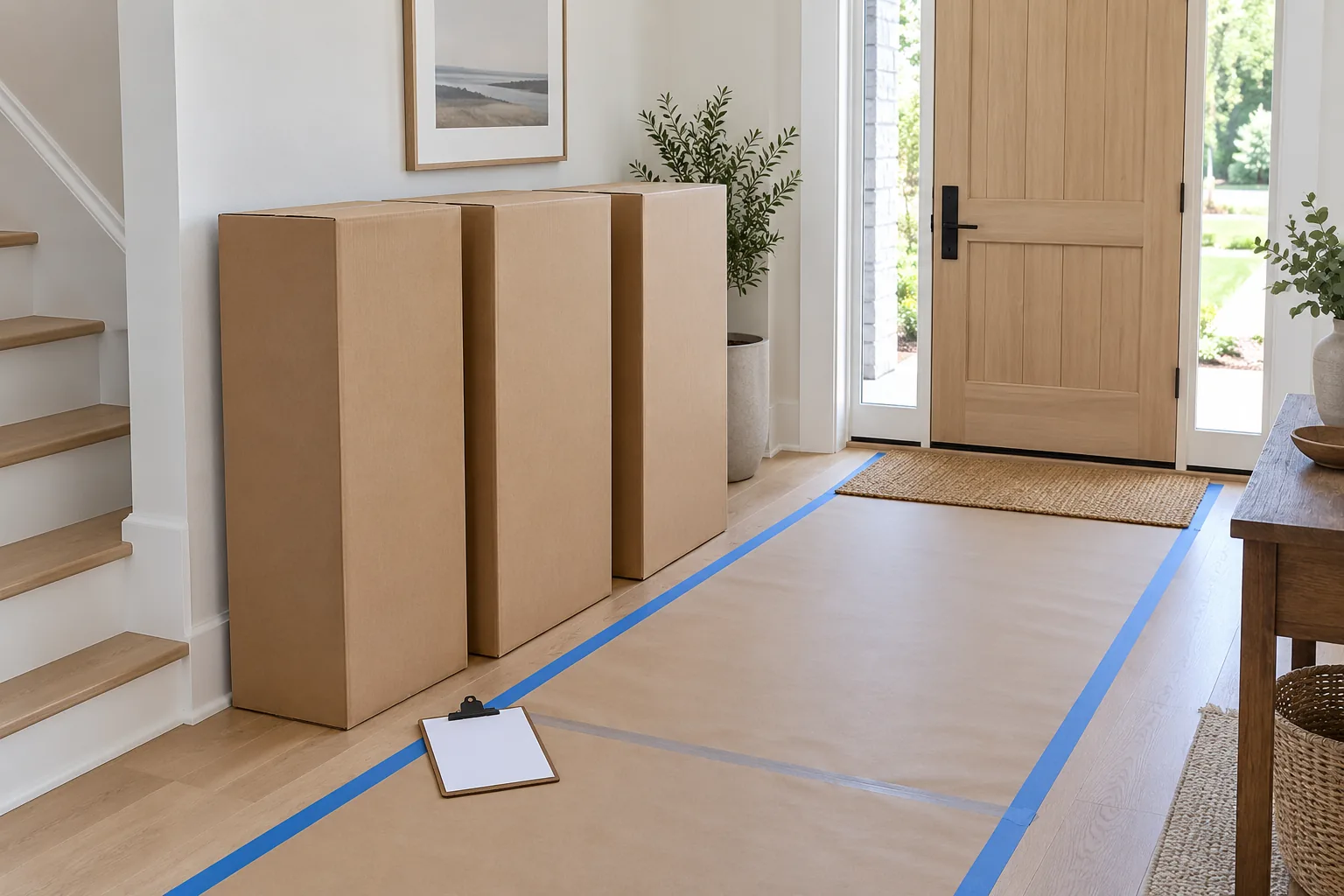
Identify a receiver for every phase, with the room-tagged schedule needed to check arrivals. Ask how the seller labels cartons and handles incomplete or damaged items. Record its reporting process and deadlines as supplied; this guide does not create a universal remedy. Decide who documents discrepancies and who has authority to resolve them.
A common storage area can obscure which cartons belong to which room. Use your stable room labels to maintain allocation after arrival, while following applicable product-handling information. Montgomery Planning’s East County geography supplies regional context for Silver Spring but does not establish storage conditions or seller coverage. Confirm those project facts directly. If submitting a package inquiry here, summarize the phase structure and unresolved question for owner review. Any outside recipient must accept the inquiry and receive it with your consent. Keep final release distinct from exploratory discussion so no one treats a possible referral as an approved professional procurement arrangement.
Inquiry process
From buying questions to a possible supplier quote
Sending an inquiry does not reserve products or book work.
Describe the purchase
Include project ZIP, room, approximate cabinet list and preferred timing.
Clarify requirements
Identify assembly, access, measurements and any separately arranged labor.
Confirm referral availability
An inquiry can be referred only if a suitable seller accepts the location and product request.
Review seller terms
Confirm the final drawing, itemized price, payment, delivery and return terms directly before ordering.
Illustrative product choices
Illustrative product visualizations, not completed work, local properties or supplier facilities.
Local buying information
Local inquiry guides
Questions
Contractor and Property Cabinet Packages: Common Questions
Can I multiply a typical kitchen by the unit count?
Use the typical design as a starting reference, then check every unit for mirrored arrangements, retained fixtures and exposed edges. Preserve exceptions by room label. Multiplication produces a reliable aggregate only after the underlying room allocations are confirmed.
Who may approve a package substitution?
Use the authority established in the actual project agreement and identify that person in the revision log. Record both internal approval and the seller’s written acknowledgment. A suggested alternate is not an accepted release simply because it appeared in a conversation.
Does this article establish trade pricing or credit eligibility?
No. Ask the intended seller whether it accepts the buyer and package, then obtain its payment and ordering terms. The schedule helps describe requirements but establishes no discount, account access, minimum quantity or accepted destination.
What information helps a phased-order inquiry?
Provide the room-tagged schedule, revision, proposed phases and the decision you need answered. State who controls release and who receives each phase. Keep unresolved dimensions or seller acceptance visibly open until the relevant party supplies confirmation.
Talk to us about contractor and property cabinet packages
Describe the purchase and project ZIP in Silver Spring. Supplier acceptance and any referral are confirmed separately; no visit or quote is booked by this form.
Calls only, we do not receive text messages.